
Healthcare
Hear the people who keep care moving
Healthcare workforces span clinical, operational and administrative roles, often across shifts, sites and intense periods of change. TalentMap helps leaders gather feedback responsibly, understand where experiences differ and focus attention on changes employees can see.

Healthcare organizations that work with TalentMap


What we hear from healthcare organizations
Hospitals and community health centres bring us the same few questions. Here is how we answer them.
Ready for accreditation and board reporting
Your staff survey often feeds Accreditation Canada work and a board report on how staff are treated. We plan the survey and reports with both in mind.
Compare with organizations like yours
Community health centres compare with community health centres, and hospitals with hospitals, where benchmark coverage exists.
Ask each staff group what applies to them
Questions can show only to the staff groups they are about, so clinical, support and unionized staff each answer what is relevant to them.
More than half of our current clients have worked with us for five years or more, and 8 in 10 have come back for another project.
Current clients are organizations that signed a contract with TalentMap in the last three years. Source: TalentMap contract records, November 2026.
One workforce, many realities
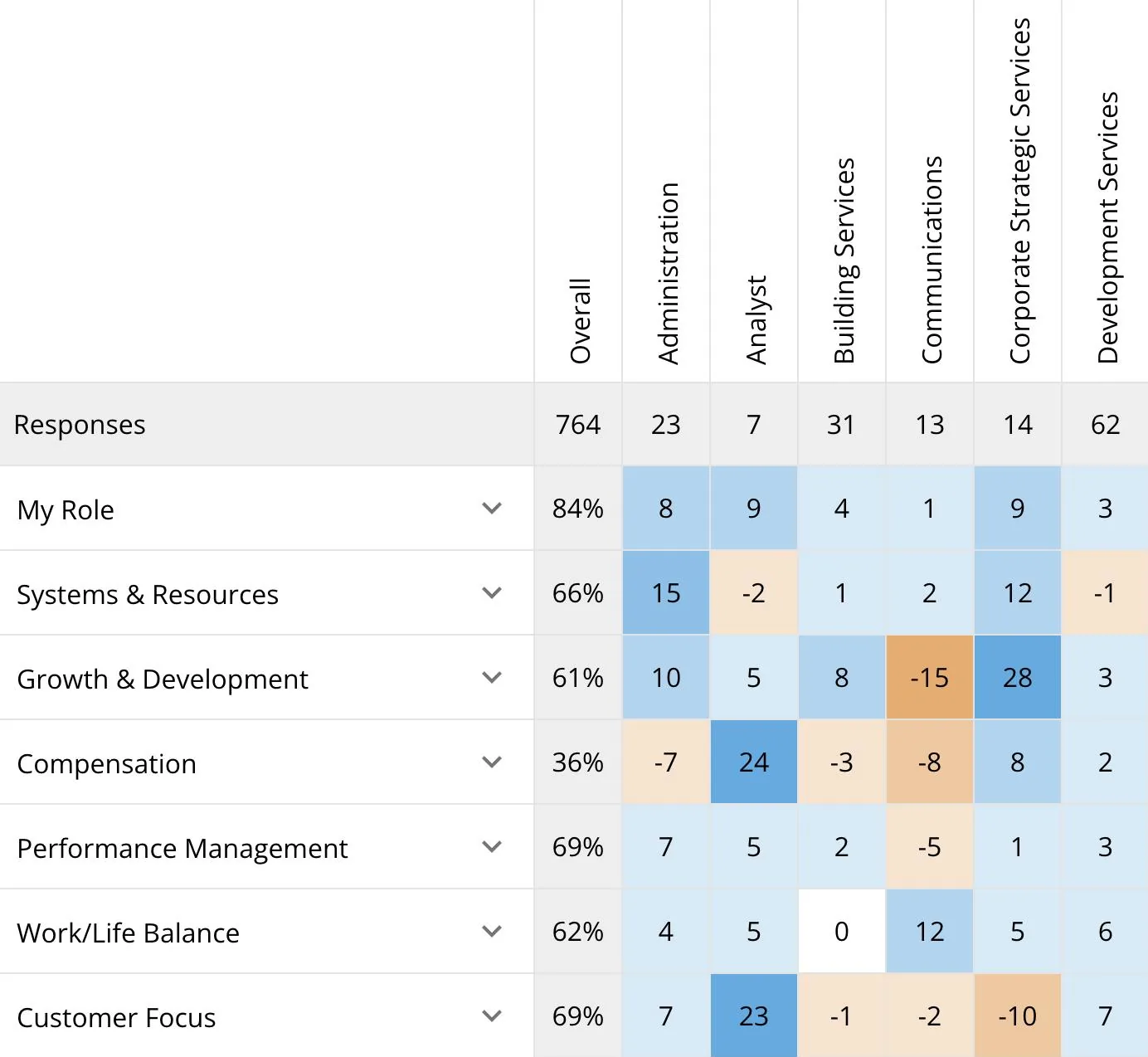
An organization-wide score can hide real differences between frontline teams, professional groups, locations and leaders. A useful listening program needs enough structure to reveal patterns without compromising trust or overwhelming managers with data.
Workforce and stakeholders
Who you are listening to, and who is waiting for the answer
Healthcare listening has to work for people who rarely sit at a desk and for leaders who answer to boards, regulators and the public. The design starts from that mix.

Clinical teams
Nursing, allied health and physicians working rotating shifts across units and sites. Participation windows, unit-level reporting and small-group protection all have to fit that pattern.

Operational and support roles
Environmental services, food services, facilities, security and registration. Often no assigned workstation, so the participation plan matters as much as the questions.

Leaders and stakeholders
Executives, program and site leaders, HR, boards and bargaining groups. Each needs a different view of the same confidential data, and each will be asked what changed.
What TalentMap supports

Listening goals and survey design matched to current priorities

Practical participation planning for distributed and shift-based teams
Reporting views designed for executives, HR and managers

Benchmark comparisons where a relevant benchmark is available

Expert interpretation and action-planning support
Trust and confidentiality
Make it safe to respond and responsible to report
Unit-level reporting and small-group protection have to fit the way clinical and support teams work. Before launch, explain three things plainly, so staff know how their answers will be handled.
What is collected?

Who can see the results?

How are small groups handled?
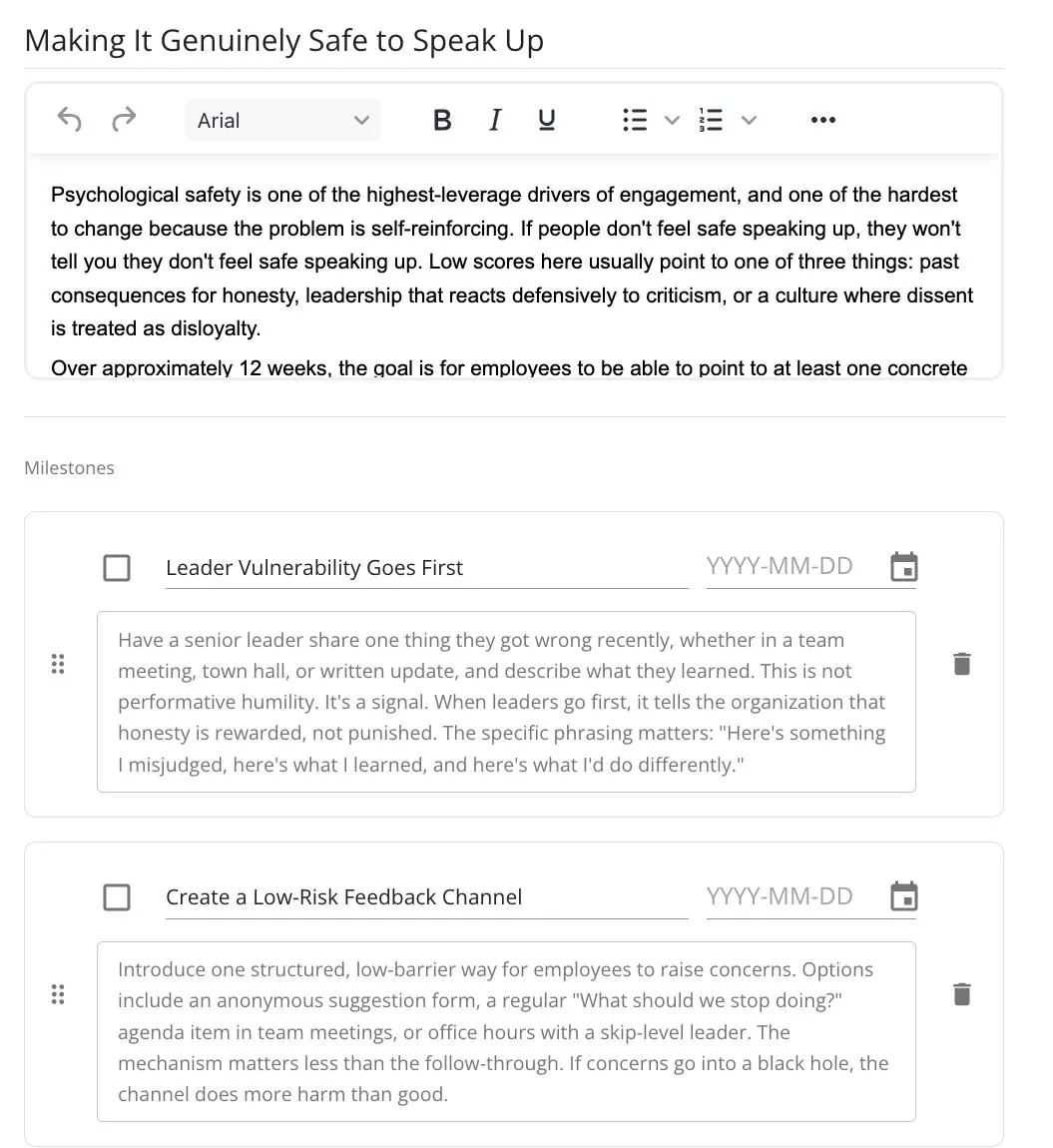
Help leaders choose a manageable next step
Focus on a small number of priorities, prepare managers for conversations and communicate back to employees about what was heard and what will happen next.
Connect listening to practical follow-through
A useful listening program connects what the organization needs to learn with how leaders will understand and respond to the results.

Listen with purpose
Clarify the goals, audience, timing and communication plan before asking employees to participate.
Understand results in context
Review patterns across the organization, consider relevant context and give each audience a clear view of what matters.

Prepare leaders to act
Focus on a manageable number of priorities, support useful conversations and communicate what will happen next.
Platform and services
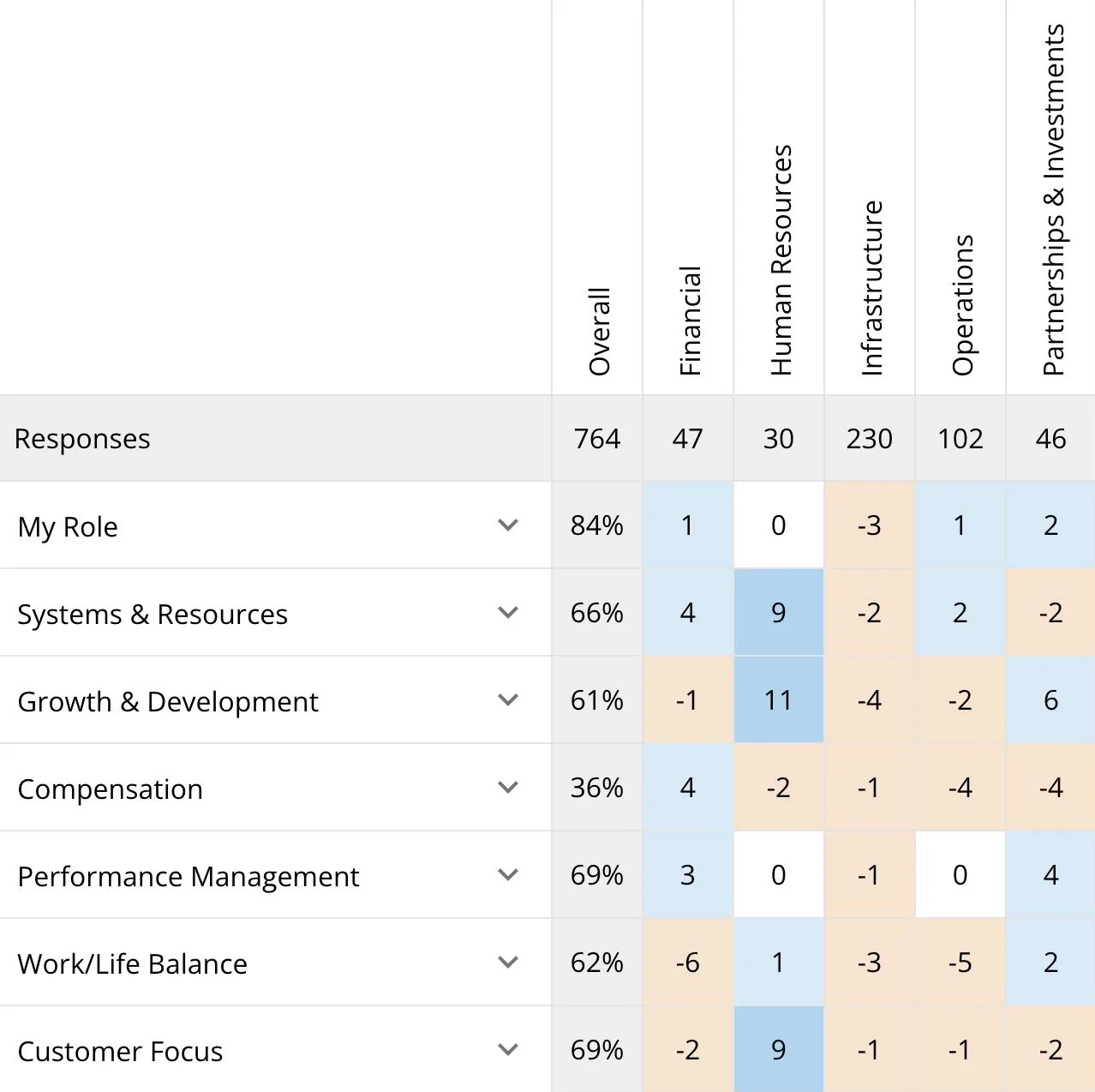
See how results differ by unit, site and role
Compare results across departments and locations, protect small groups with reporting thresholds and give each leader the view they can act on. TalentMap's specialists help interpret what the pattern means before it reaches a manager.

Reporting and benchmarks
Views for executives, HR and unit managers, with relevant comparisons where approved coverage exists.
Explore reporting
Action planning
Help unit and site leaders pick a manageable number of priorities and show staff what is changing.
Explore action planning

Expert services
Listening strategy, survey design, interpretation and executive communication from TalentMap's specialists.
Explore services
Keep exploring

All industries
See how listening changes across the sectors TalentMap serves.
Explore industries
Insights
Research, articles and practical guides on employee listening and action planning.
Explore insights
References
Looking for an example from your sector? Contact us to ask about relevant references.
Ask about references
Shape a listening program around your healthcare workforce
Tell us about your clinical, operational and support teams and what you need to understand. We will show you a practical path from feedback to action.