
Private and complex organizations
See what employees experience across a complex organization
Growth, restructuring, multiple locations and specialized teams can make it difficult to see where employee experience is consistent, and where it is not. TalentMap helps create a listening program that reflects your structure and shows leaders where to act first.

Organizations that work with TalentMap





What we hear from private companies
Manufacturers, real estate, energy and professional services firms bring us the same few questions. Here is how we answer them.
When scores feed scorecards, read them carefully
Many companies tie engagement to business-unit scorecards. We help leaders understand what the numbers do and do not say before decisions are made on them.
Every business unit gets its own read
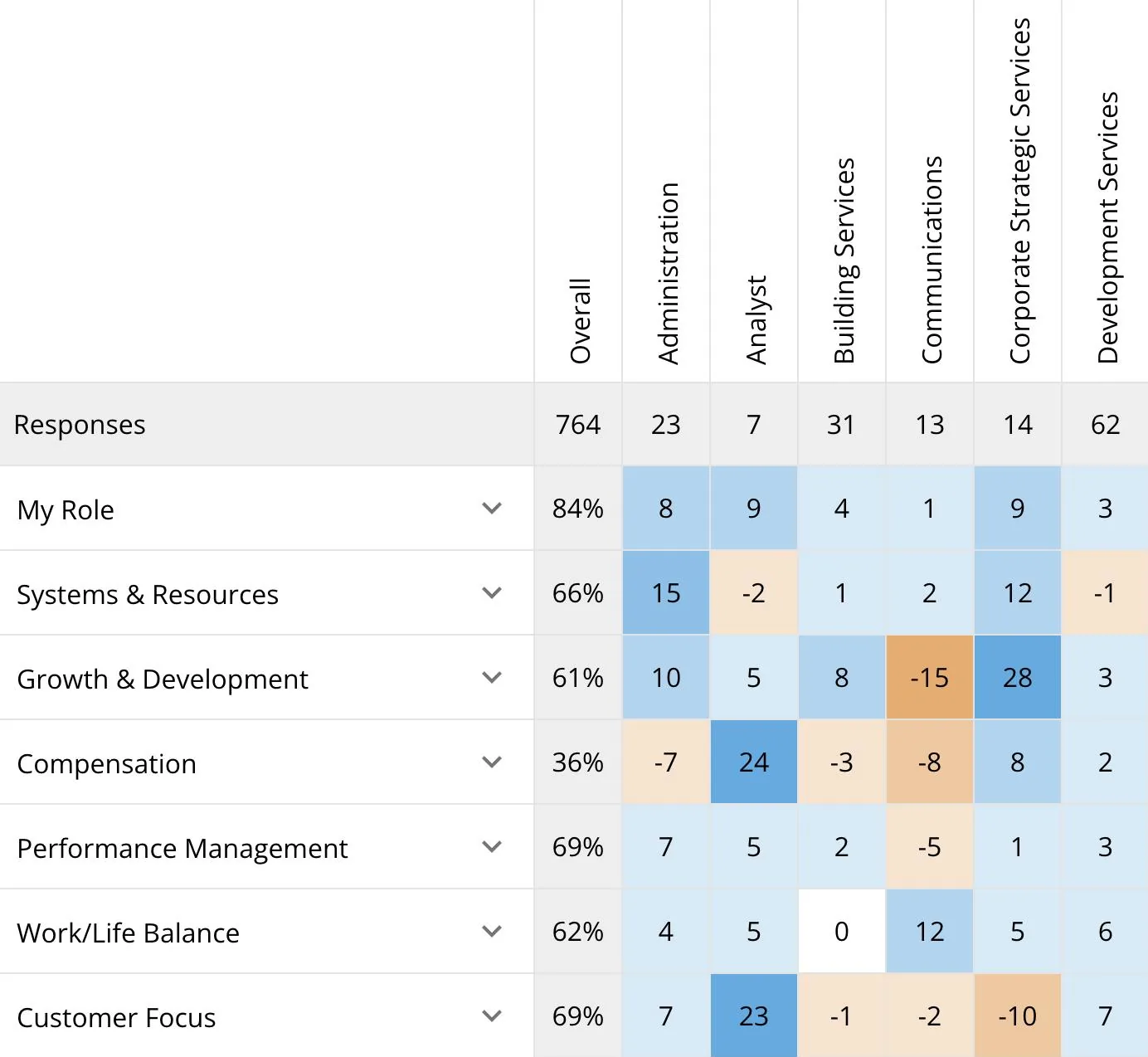
The executive team sees results first, then each business unit gets its own session, so leaders talk about their own people, not an average.
People stop answering when nothing happens
A long survey with no feedback afterwards teaches people to ignore the next one. We keep it focused and help you share what you heard.
More than half of our current clients have worked with us for five years or more, and 8 in 10 have come back for another project.
Current clients are organizations that signed a contract with TalentMap in the last three years. Source: TalentMap contract records, November 2026.
Built for organizations with many moving parts
TalentMap works with private-sector organizations that have multiple locations, business units or specialized teams, and with organizations navigating growth, restructuring, integration or leadership change.

Private-sector employers
Companies that need to understand engagement, retention and manager effectiveness without a public-sector reporting context.

Multi-site and multi-entity structures
Organizations with several locations, divisions, business units or operating companies where one average hides local reality.
Organizations in transition
Mergers, restructures, rapid growth or leadership change, where the workforce needs to be heard while the structure is moving.
Complexity can hide the signal
Enterprise averages may overlook local issues, while too many cuts create noise and confidentiality risk. Start with the decisions ahead, then design the survey and reporting structure around the audiences expected to act.
Who is involved, and who needs to trust the process

Frontline and site teams
Shift-based, field, retail, plant or branch employees whose experience is shaped by their location and immediate manager more than by head office.

Functions and specialists
Corporate functions, technical and professional groups and small specialist teams whose results need care to report without exposing individuals.

Executives, owners and boards
Leaders who need a clear read on the whole organization, an honest view of where it differs and a defensible basis for what they do next.
What TalentMap supports

Engagement, pulse, entry, exit and focused listening

Reporting that follows your organizational hierarchy

Executive, HR and manager views

Comment analysis and expert interpretation

Action-planning support and follow-through
Confidentiality first, then a clear path from listening to action
In a complex structure, trust depends on employees knowing that small groups are protected and that results lead somewhere. The approach is the same one TalentMap uses in every sector.
1
Listen
Design the survey and reporting structure around the decisions ahead and the audiences expected to act, with confidentiality thresholds set before launch.
2
Understand
See where experience is consistent and where it is not, by location, function and level, with context to separate real differences from noise.
3
Act
Focus leaders and managers on a small number of priorities with named owners, at the level where the issue actually lives.
4
Prove impact
Make follow-through visible so the next survey is answered against real change, not against silence.
When to listen
Common moments to listen
Each of these changes how employees experience work, often faster than leaders can see it. Tell us which one you are facing.
Talk to our team
Organizational change or integration
Leadership transitions
Growth across locations or functions

Retention and manager-effectiveness concerns

Building a repeatable listening rhythm
Platform and services
Reporting that follows your structure
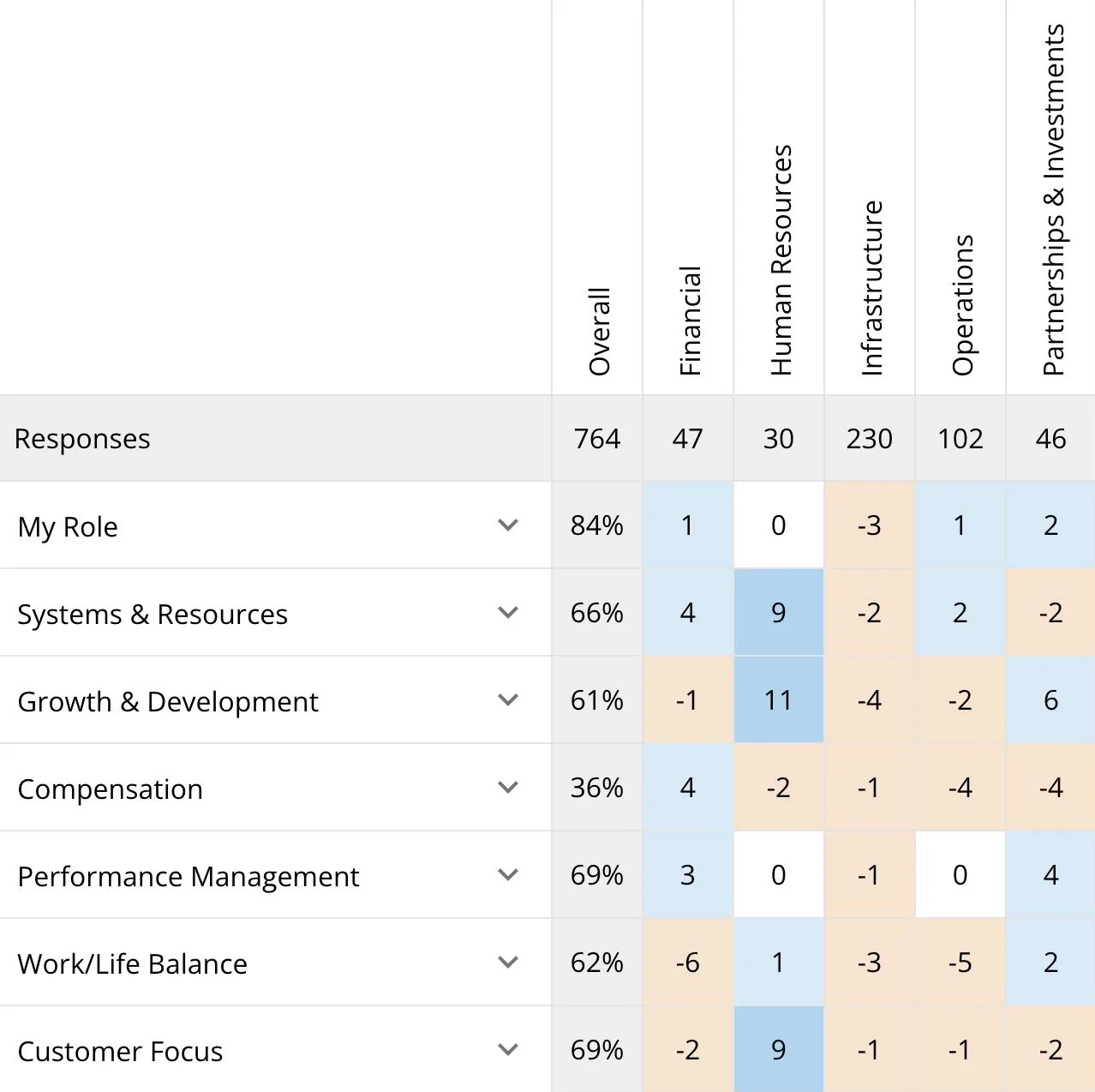
Results are reported against your organizational hierarchy, so an executive, a divisional leader and a site manager each see the view they can act on, with small groups protected.
Platform
Reporting and benchmarks
Clear reporting, relevant comparisons and comment analysis.
Explore reportingPlatform
Action planning
Move from results to focused priorities and visible follow-through.
Explore action planningServices
Expert services
Strategy, design, interpretation, executive presentations and action-planning support.
See servicesBring clarity to a complex workforce
Share your structure, priorities and current listening process. We will show you a practical approach.