
See where employee experience is changing
A single listening cycle captures a moment. A consistent approach over time helps leaders distinguish persistent strengths, emerging concerns and areas where change is, or is not, being felt.

Questions trends can help answer
- Which strengths remain consistent?
- Where are experiences improving or declining?
- Do changes affect the whole organization or specific groups?
- Are leadership actions reaching employees?
- Which issues need deeper listening or qualitative context?
Keep the context with the trend
Compare responsibly
Changes in workforce mix, survey design, response patterns and organizational structure can affect comparisons. TalentMap helps teams interpret trends with appropriate context rather than treating every movement as proof of impact.
Connect quantitative and qualitative insight
Pair scores and approved benchmarks with employee comments, operational context and leader conversations.
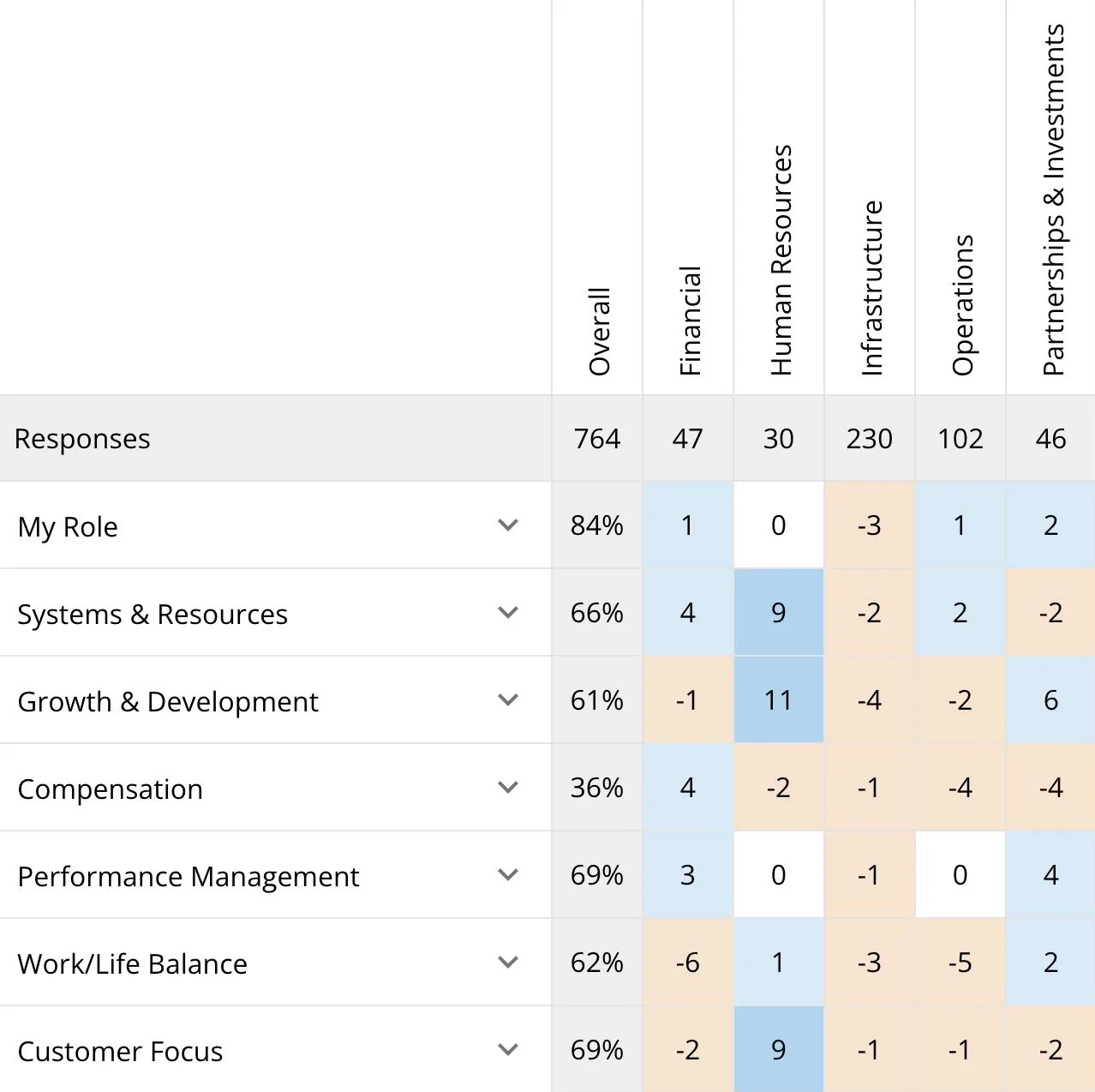
In Compass
See whether change is reaching every group
Compare departments, locations and demographic groups to see where experiences differ.
Track change from the previous period to see whether actions are being felt.
Common questions
Can questions be customized?
Programs start from established survey content and tailor it carefully. Changing established questions can affect how results compare over time, so tailoring decisions are reviewed before launch.
How are results reported?
Reporting covers usable views of results, relevant comparisons, comment analysis and expert interpretation.
Which benchmarks are available?
Available comparisons depend on the group you want to compare against, so benchmark coverage is confirmed for your organization rather than promised in advance.