
Private and complex organizations
See what employees experience across a complex organization
Growth, restructuring, multiple locations and specialized teams can make it difficult to see where employee experience is consistent, and where it is not. TalentMap helps create a listening program that reflects your structure and shows leaders where to act first.

Organizations that work with TalentMap





Who this page is for
This page is for private-sector organizations, especially those with multiple locations, business units or specialized teams, and for organizations navigating growth, restructuring, integration or leadership change when a sector-specific TalentMap page does not fit.
Private-sector employers
Companies that need to understand engagement, retention and manager effectiveness without a public-sector reporting context.
Multi-site and multi-entity structures
Organizations with several locations, divisions, business units or operating companies where one average hides local reality.
Organizations in transition
Mergers, restructures, rapid growth or leadership change, where the workforce needs to be heard while the structure is moving.
Municipal governments, healthcare organizations, colleges and universities and broader public sector bodies each have their own page.
Complexity can hide the signal
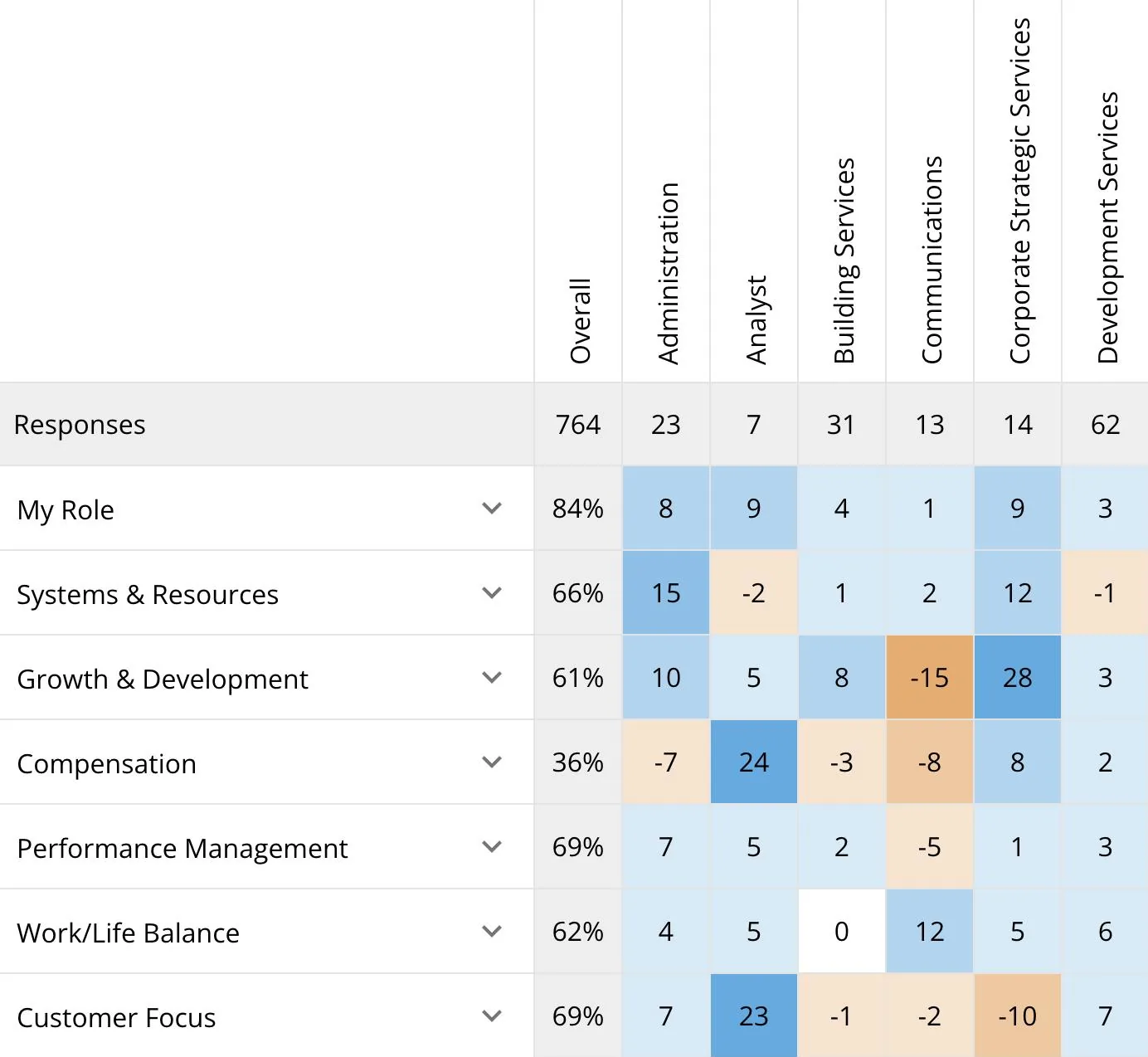
Enterprise averages may overlook local issues, while too many cuts create noise and confidentiality risk. Start with the decisions ahead, then design the survey and reporting structure around the audiences expected to act.
Who is involved, and who needs to trust the process
Frontline and site teams
Shift-based, field, retail, plant or branch employees whose experience is shaped by their location and immediate manager more than by head office.
Functions and specialists
Corporate functions, technical and professional groups and small specialist teams whose results need care to report without exposing individuals.
Executives, owners and boards
Leaders who need a clear read on the whole organization, an honest view of where it differs and a defensible basis for what they do next.
What TalentMap supports
Engagement, pulse, lifecycle and focused listening where currently offered
Reporting structures that follow your approved organizational hierarchy
Executive, HR and manager views
Comment analysis and contextual interpretation where currently available
Action-planning support and follow-through
Confidentiality first, then a clear path from listening to action
In a complex structure, trust depends on employees knowing that small groups are protected and that results lead somewhere. The approach is the same one TalentMap uses in every sector.
1
Listen
Design the survey and reporting structure around the decisions ahead and the audiences expected to act, with confidentiality thresholds set before launch.
2
Understand
See where experience is consistent and where it is not, by location, function and level, with context to separate real differences from noise.
3
Act
Focus leaders and managers on a small number of priorities with named owners, at the level where the issue actually lives.
4
Prove impact
Make follow-through visible so the next survey is answered against real change, not against silence.
Common moments to listen
Organizational change or integration
Leadership transitions
Growth across locations or functions
Retention and manager-effectiveness concerns
Building a repeatable listening rhythm
Platform and services
Reporting that follows your structure
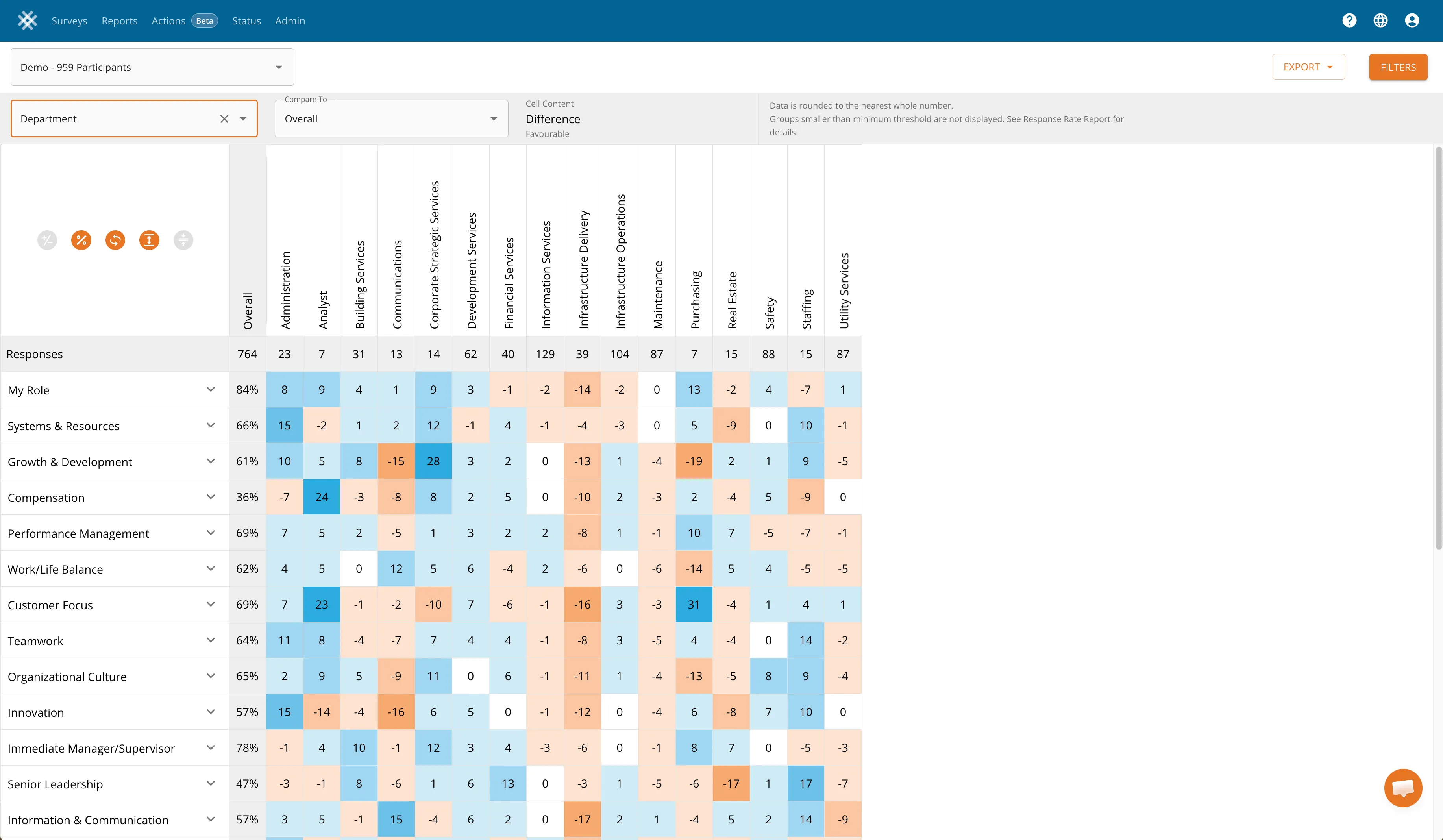
Results are reported against your organizational hierarchy, so an executive, a divisional leader and a site manager each see the view they can act on, with small groups protected.
Platform
Reporting and benchmarks
Clear reporting, relevant comparisons and comment analysis.
Explore reportingPlatform
Action planning
Move from results to focused priorities and visible follow-through.
Explore action planningServices
Expert services
Strategy, design, interpretation, executive presentations and action-planning support.
See servicesBring clarity to a complex workforce
Share your structure, priorities and current listening process. We will show you a practical approach.