
Higher Education
Understand the people experience across your campus
Colleges and universities bring together faculty, staff and administration across campuses, faculties, schools, departments and bargaining units, each with its own reality. TalentMap helps build a listening process the whole institution trusts, clarify the patterns behind an institutional average and support follow-through leaders can point to.

Colleges and universities that work with TalentMap






An institutional average explains very little
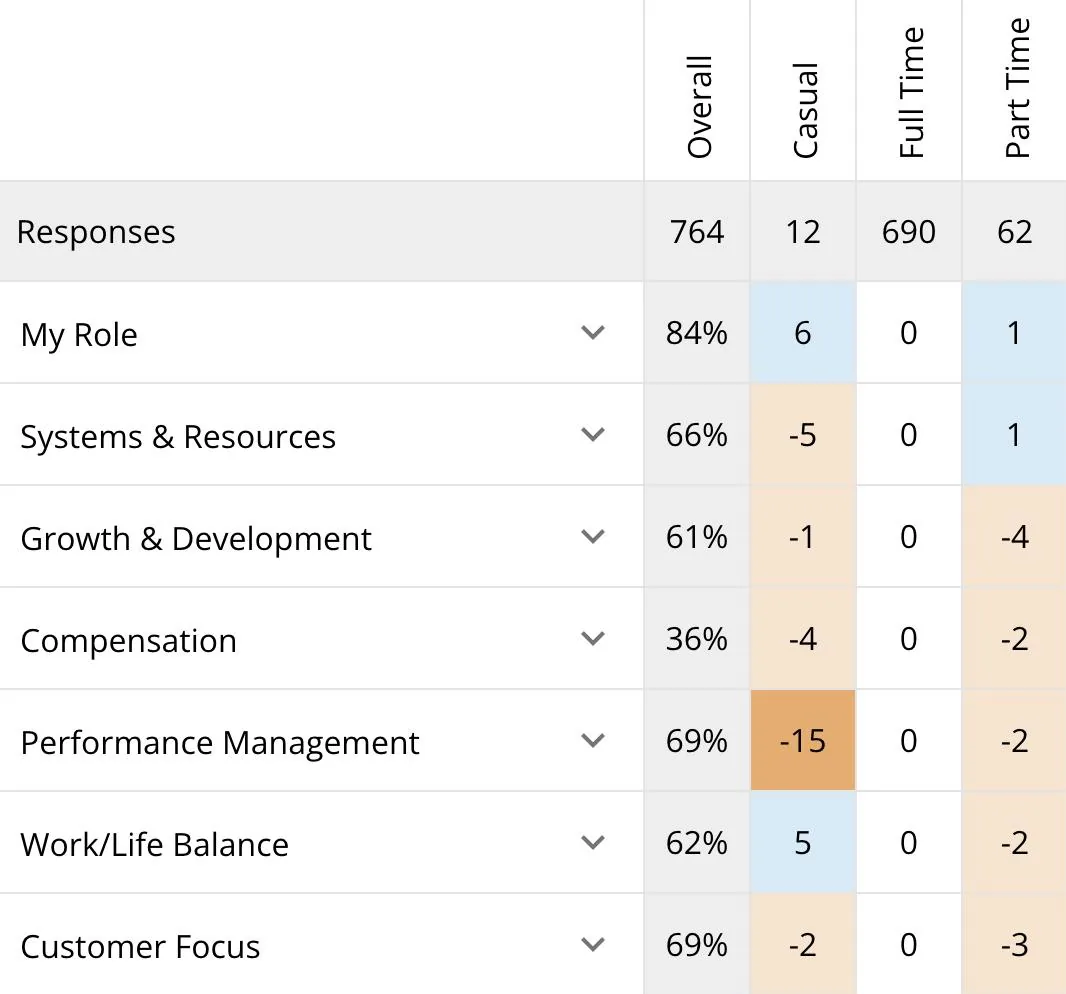
A health sciences faculty, a facilities crew and a registrar's office rarely share the same experience of work. Governance structures, full-time and contract appointments, multiple collective agreements and satellite campuses all shape how people answer and who is able to act on the result. The listening design, reporting structure and communications should reflect how the institution actually works.
Workforce and stakeholders
Who is involved, and who needs to trust the process
Post-secondary listening must be credible to faculty, staff, unions and employee associations, senior leadership, governing boards, and academic and administrative units. The design should reflect the institution's governance, labour-relations and privacy context without assuming that every institution uses the same structures.
Faculty and instructors
Full-time, contract and sessional faculty and instructors across faculties, schools and departments, often represented by their own union or association, with different terms of appointment and different expectations of the institution.
Staff
Administrative, technical, student-services, library, facilities and food-services roles, often spread across campuses and covered by more than one collective agreement, many without a desk of their own.
Senior leadership and governance
Presidents, vice-presidents, deans, directors and department heads, plus the governing board and any academic governance body the institution uses. Each needs a different view of the same confidential data and will be asked what changed.
What TalentMap supports
Agreement on the decisions and questions that matter
Established survey content adapted to academic and administrative units
Participation and communication planning
Reporting for institution, faculty, department and manager audiences
Relevant comparisons where approved higher-education norms exist
Interpretation, senior administration and board communication, and action support
Build trust before asking for feedback
Explain the purpose, confidentiality approach, reporting rules and follow-through plan before launch. Small academic units, bargaining groups and privacy expectations each need clear, approved language so faculty and staff know how their responses will be used and protected.
Turn insight into visible follow-through
Help deans, directors and department heads choose priorities that fit their span of control, equip managers and chairs to discuss results with their teams and close the loop with faculty and staff about what was heard and what will happen next.
Our approach
Connect listening to practical follow-through
A useful listening program connects what the institution needs to learn with how its leaders will understand and respond to the results.
1
Listen with purpose
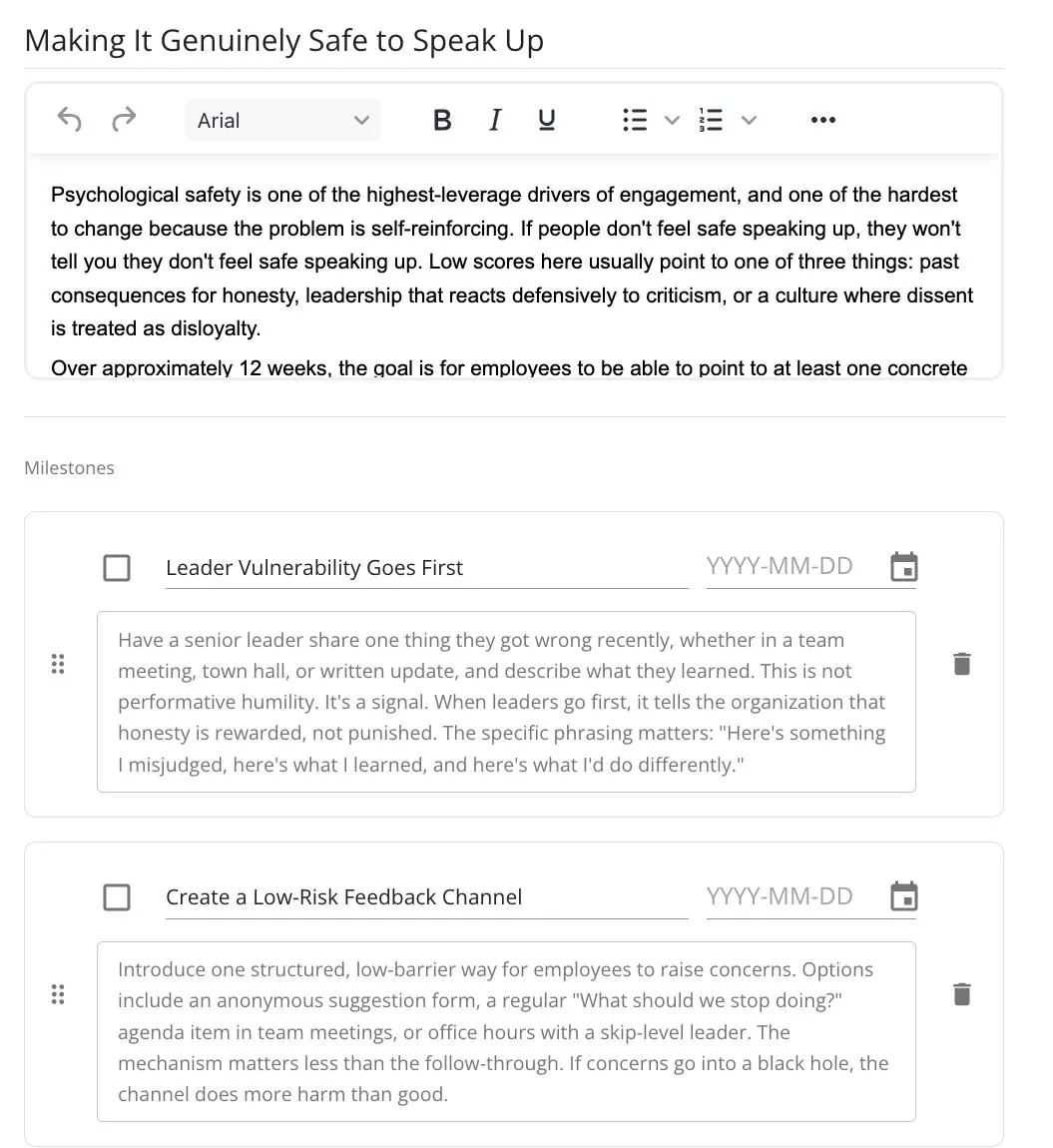
Clarify the goals, audiences, timing and communication plan, and consult the groups who need to trust the process, before asking faculty and staff to participate.
2
Understand results in context
Review patterns across faculties, departments, campuses and employee groups, and give each audience a clear view of what matters most.
3
Prepare leaders to act
Focus deans, directors and chairs on a manageable number of priorities and support useful conversations within their span of control.
4
Prove impact
Communicate back what was heard and what will happen next, then revisit progress so the next cycle measures change rather than repeating the question.
Platform and services
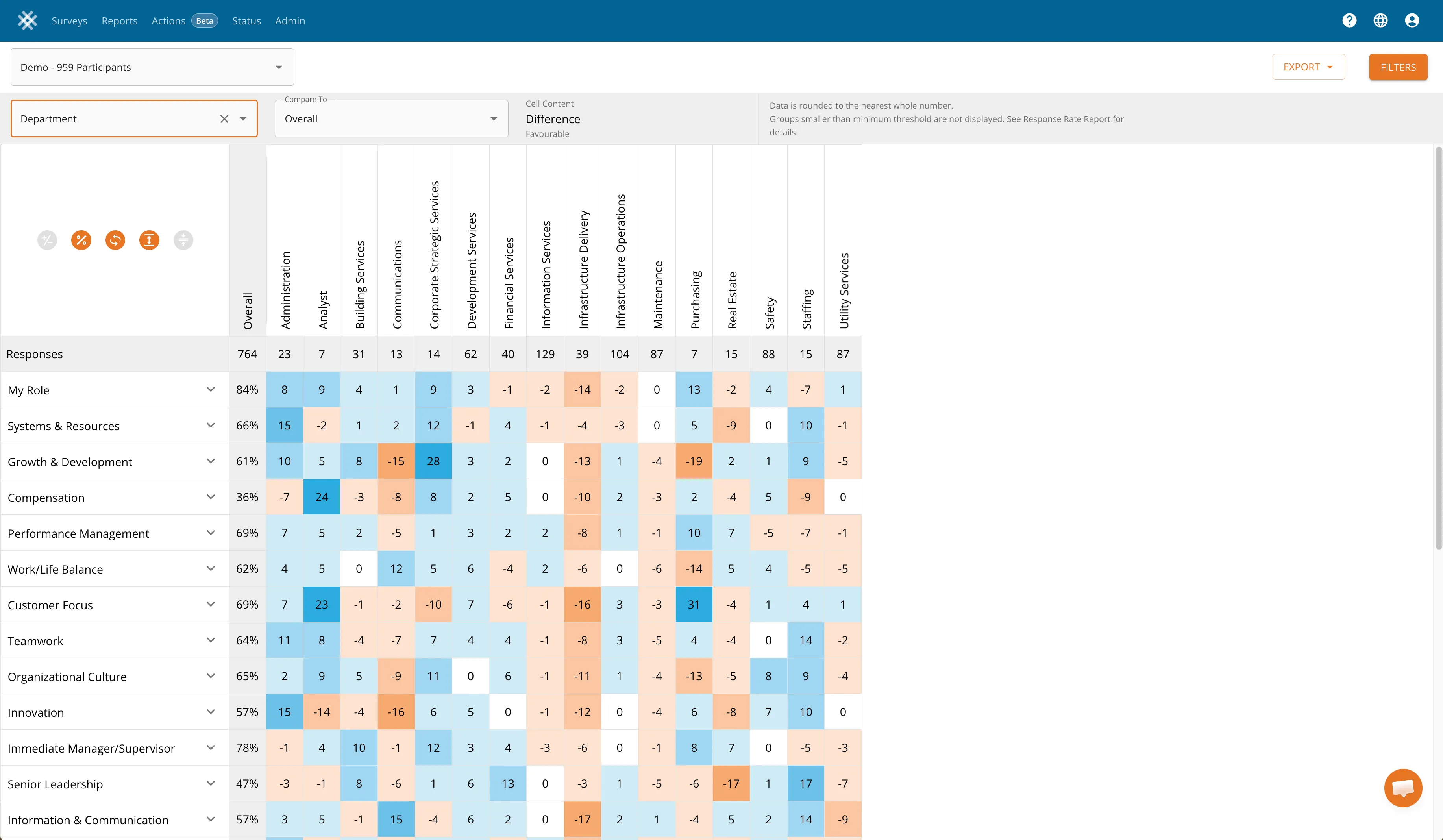
See how results differ by faculty, department and campus
Compare results across academic and administrative units, protect small departments with reporting thresholds and give deans, directors and chairs the view they can act on. TalentMap's specialists help interpret the pattern before it reaches a unit leader.

Reporting and benchmarks
Views for senior administration, HR, deans and chairs, with relevant comparisons where approved coverage exists.
Explore reporting

Action planning
Help deans, directors and department heads pick a manageable number of priorities and show faculty and staff what is changing.
Explore action planning

Expert services
Listening strategy, survey design, interpretation and senior-administration communication from TalentMap's specialists.
Explore services
Keep exploring

All industries
See how listening changes across the sectors TalentMap serves.
Explore industries

Insights
Research, articles and practical guides on employee listening and action planning.
Explore insights

References
Looking for an example from your sector? Contact us to ask about relevant references.
Ask about references